Technical Articles
But here’s the thing- machines don’t forgive mistakes. One undetected fault, and suddenly you are dealing with downtime, damaged equipment, or worse. That’s exactly where a protection relay becomes critical. It doesn’t wait for failure. It watches. Constantly. Quietly.
Think about a busy plant where hundreds of electrical events happen every second. Some are normal. Some aren’t. Catching those “not normal” moments early is what keeps everything running.
Once you understand how protection relays work, you start seeing them less as components and more as decision-makers.
Let’s not overcomplicate it. A protection relay is basically a smart observer inside your electrical system. It keeps track of key parameters, like current, voltage, frequency, and even phase angles, and looks for anything unusual.
Now here’s the important part. It doesn’t physically stop the fault. Instead, it detects it and sends a signal to trip a circuit breaker. This action isolates the faulty section before the problem spreads. In reality, this process happens incredibly fast. We are talking milliseconds. Faster than any human could react.
The moment current crosses a preset threshold, an overcurrent protection relay triggers a response. No hesitation. Also, consider a motor protection relay. Motors are sensitive. Overloads, phase loss and overheating can damage them quickly. The relay ensures that doesn’t happen.
In larger setups, a generator protection relay handles even more complex scenarios like voltage imbalance or reverse power conditions. Modern systems rarely rely on just one relay. Multiple types of protective relays work together, each handling a specific risk. This layered approach is what makes systems resilient.
Not all faults behave the same way, so expecting one relay to handle everything would be unrealistic. This is why engineers use different types of protective relays, each designed to detect a particular kind of abnormal condition in the system.
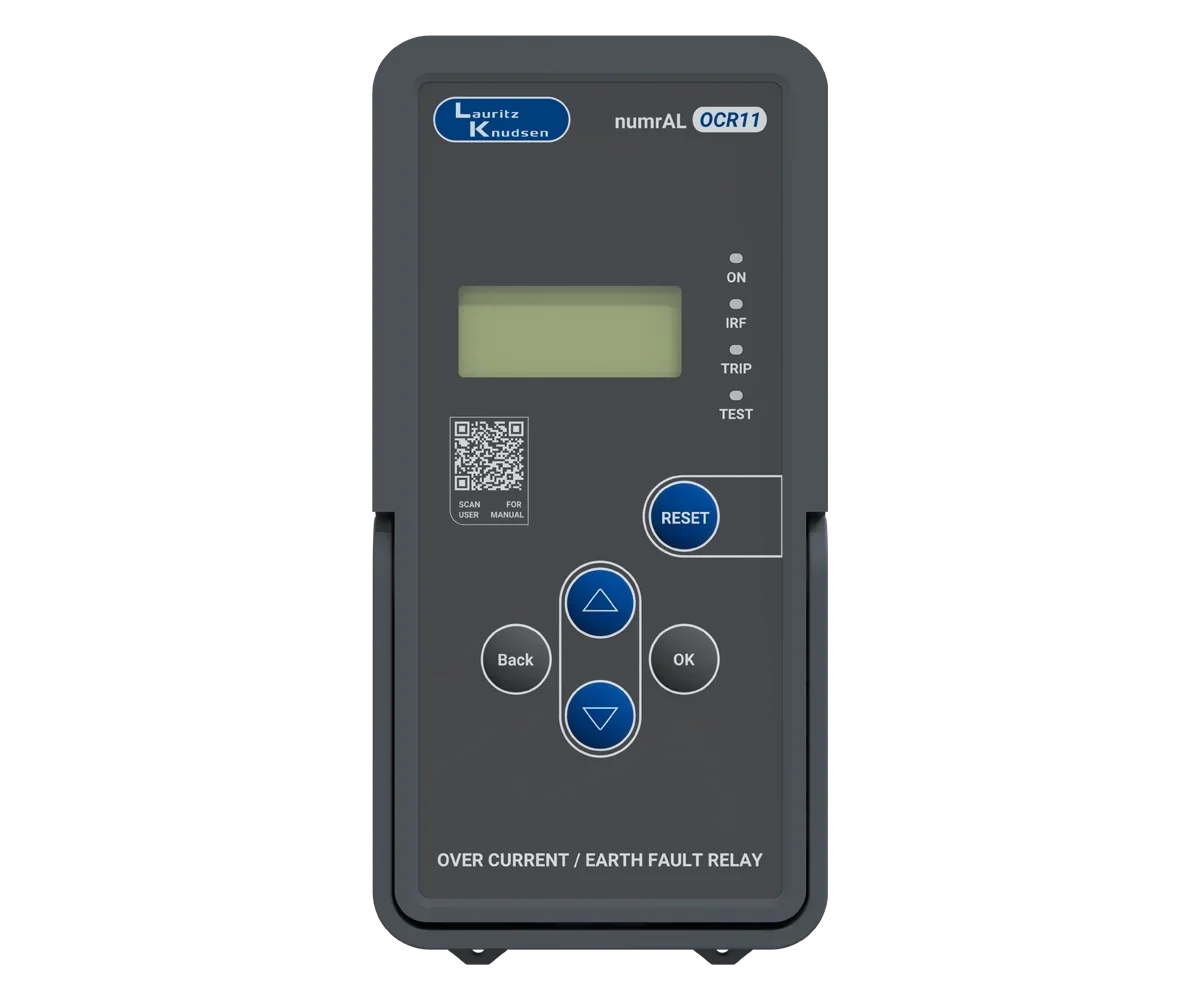
An overcurrent protection relay works on one simple principle- too much current means trouble. For example, during a short circuit, current rises sharply. The relay detects this spike and sends a trip signal. Some relays act instantly, while others have a time delay to avoid nuisance tripping. Coordination between relays is key. It ensures only the faulty section is isolated.
Differential relays focus on comparison. They measure the current entering and leaving a system. If there’s a mismatch, something is wrong internally. Think about a transformer. Ideally, what goes in should come out. If it doesn’t, that difference indicates a fault. These relays are highly precise and are commonly used in critical equipment where internal faults must be detected instantly.
Distance relays are more advanced. They don’t just look at current. They calculate impedance. When a fault occurs, impedance changes. The relay uses this information to estimate how far the fault is. This is especially useful in transmission lines, where faults can occur over long distances. In reality, it helps isolate faults quickly without affecting the entire network.
Directional relays add intelligence to protection systems. They determine the direction of current flow during a fault. This is important in interconnected systems where power can flow in multiple directions. Without this feature, relays might trip unnecessarily. By identifying direction, they ensure only the affected section is disconnected, improving system stability and reducing unnecessary outages.
Now let’s get to the heart of it. A protection relay isn’t just reacting randomly. It follows a clear logic- monitors, compares, decides, and acts. Sounds simple, right? But in reality, this process involves precise measurements and lightning-fast decisions happening continuously in the background.
Every relay constantly measures system conditions- current, voltage, frequency, and more. Think about a running motor. If the current suddenly increases, something is off. A motor protection relay picks this up instantly. These measurements are continuous. But in reality, they occur in rapid sampling cycles, with a very small processing delay (typically in microseconds to milliseconds).
Measurement alone isn’t enough. The relay compares actual values with preset limits. For example, a generator protection relay might be configured to detect voltage imbalance beyond a safe range. When that limit is crossed, it flags it as a fault. These settings are carefully engineered based on system requirements, ensuring accurate and reliable protection.
Once a deviation is detected, the relay classifies the condition based on its programmed logic (such as overcurrent, impedance, or directional elements). Based on this, it decides whether to act. Modern systems often use multiple types of protective relays working together, ensuring only the affected section is isolated. This coordination prevents unnecessary shutdowns across the system.
Finally, the relay takes action. It sends a signal to the circuit breaker, which disconnects the faulty section from the system. For instance, an overcurrent protection relay will trip instantly during a severe fault. Here’s the key point- this entire process happens in milliseconds. Fast enough to prevent equipment damage and maintain system stability.
Choosing the right relay isn’t just about picking a device from a catalogue. In reality, it’s about understanding your system- how it behaves on a good day and how it reacts under stress.
First, think about the type of load. A setup protecting motors will need a motor protection relay that can handle overloads, phase failures, and thermal conditions. But if you are dealing with generators, the requirements shift completely. That’s where a generator protection relay becomes essential, offering protection against voltage imbalance, reverse power, and more complex faults.
Another important factor is fault sensitivity. Some systems need extremely fast response times, especially where high-value equipment is involved. In such cases, relying on the right combination of types of protective relays ensures better coordination and selectivity.
Settings matter just as much as the relay itself. Poorly configured relays can either trip too often or, worse, not trip at all when needed. So really, it’s not just about protection. It’s about precision. Getting that balance right makes all the difference.
Also Read: Motor Protection Techniques: Overload, Short Circuit & Phase Failure
If you step back and look at the bigger picture, a protection relay is more than just a safety device. It’s a decision-making layer built into your electrical system.
From a motor protection relay safeguarding critical equipment to a generator protection relay handling complex power conditions, each relay plays a specific role. When combined with other types of protective relays, they create a system that’s both intelligent and reliable.
Lauritz Knudsen Electrical & Automation offers a comprehensive range of protection relays, covering overcurrent, earth fault, voltage monitoring, and more, designed for demanding industrial environments. Their solutions aren’t just about protection. They are about ensuring continuity, efficiency, and peace of mind.
Because in reality, faults will happen. The real question is- how prepared is your system to handle them?
Assistance Required?
Select an option to Contact Us

 Contact Us

